 Login
Login Sign Up
;%20}%2050%25%20{%20opacity:%200.7;%20transform:%20scale(0.96);%20}%20100%25%20{%20opacity:%201;%20transform:%20scale(1);%20}%20}%20%3c/style%3e%3c/defs%3e%3cg%20class='cls-1'%3e%3cpath%20d='M19.84,19.77l2.75,2.75-4.09,4.09c3.54,2.99,7.99,4.93,12.87,5.34V10.99H10.41c.41,4.88,2.35,9.33,5.34,12.86l4.09-4.09Z'/%3e%3cpath%20d='M0,0v43.02h41.68V0H0ZM35.24,35.91h-1.94c-6.71,0-12.85-2.47-17.56-6.55l-7.88,7.88-2.75-2.75,7.88-7.88c-4.08-4.71-6.55-10.85-6.55-17.56v-1.94h28.8v28.8Z'/%3e%3c/g%3e%3c/svg%3e)
The Key to Skincare: The Role of Moisturizers and How to Choose the Right Formula
In a skincare routine, serums act as the “problem solvers,” while moisturizers are the “protectors” that lock in the results.
Moisturizers do not only add hydration to the skin—they also help seal in all the active ingredients applied underneath, ensuring their effectiveness lasts longer.
Many people with oily skin tend to skip this step, but in reality, every skin type needs a properly balanced moisturizer to maintain a healthy skin barrier.
A well-formulated moisturizer strengthens the skin’s defense system and increases its resilience against environmental stressors.
The Three Pillars of a Moisturizer Formula
A well-balanced moisturizer is typically built on three functional ingredient groups:
1. Humectants (Water Attractors)
These ingredients draw moisture into the skin from the environment or deeper skin layers.
Common examples:
- Hyaluronic Acid
- Glycerin
- Panthenol (Vitamin B5)
They help increase hydration levels and improve skin plumpness.
2. Emollients (Softening Agents)
These ingredients fill the gaps between skin cells, improving smoothness and softness.
Common examples:
- Ceramides
- Squalane
- Plant-based oils
They help restore flexibility and smooth skin texture.
3. Occlusives (Moisture Sealers)
These form a protective layer on the skin’s surface to prevent water loss.
Common examples:
- Petrolatum (Vaseline)
- Shea Butter
- Beeswax
They are especially important for repairing a compromised skin barrier.
Choosing the Right Moisturizer Texture
The texture of a moisturizer directly affects comfort, absorption, and overall routine success.
1. Gel Formulas: Lightweight and Fresh
Water-based, oil-free, fast-absorbing textures.
Best for:
- Oily skin
- Acne-prone skin
Benefits:
- Non-comedogenic (does not clog pores)
- Lightweight feel on the skin
- Excellent makeup base
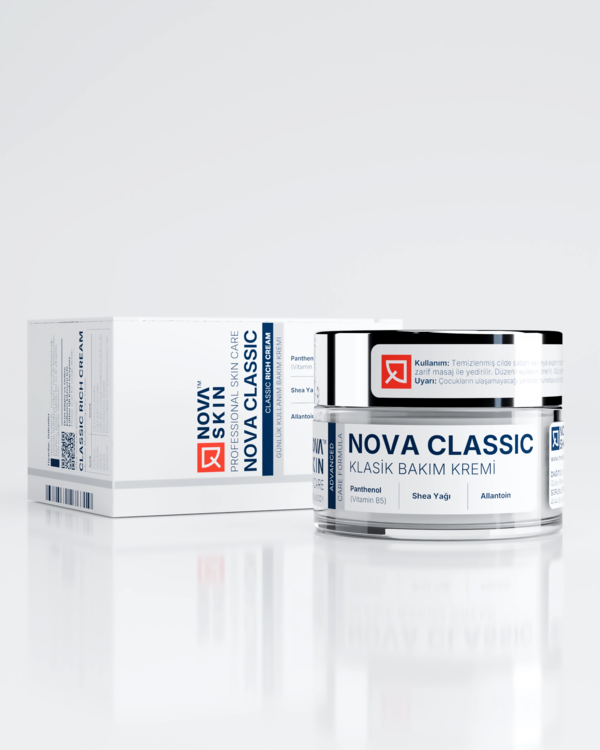
2. Cream Formulas: Classic Comfort
Balanced blends of oil and water with a richer texture.
Best for:
- Normal skin
- Combination skin
- Dry skin
Benefits:
- Deep hydration
- Long-lasting softness
- Daily barrier support
3. Balms and Ointments: Barrier Protection Mode
Highly occlusive and emollient-rich formulas with a thick texture.
Best for:
- Very dry skin
- Compromised skin barrier
- Eczema-prone areas
Benefits:
- Strong protective layer
- Accelerates skin recovery
- Minimizes moisture loss
Routine Compatibility: Matching Moisturizer with Actives
Your moisturizer should not only match your skin type, but also your daily skincare routine.
On Retinol or Acid Nights
Ingredients like retinol and exfoliating acids can temporarily increase dryness and sensitivity.
In these cases:
- Use the “sandwich method” (moisturizer → active → moisturizer)
- Or choose a richer, barrier-repair moisturizer containing ceramides
This helps reduce irritation and maintain skin comfort.
Sustainability and Skin Tolerance
If your moisturizer causes burning, stinging, or discomfort, it may indicate that your current active ingredients are too strong for your skin barrier.
A comfortable moisturizer is not optional—it is what makes a routine sustainable over time.
Without it, even the best active ingredients cannot be used consistently.
Conclusion: Hydration Does Not Mean Oiliness
Dehydrated skin often compensates by producing more oil, which can paradoxically lead to:
- Increased shine
- Breakouts
- Uneven texture
Using the right moisturizer does not make the skin oily—it restores balance.
By choosing the correct texture and formulation for your skin type and condition, you help your skin maintain its natural ecosystem and long-term health.
In skincare, moisturizer is not just an extra step—it is the foundation that holds everything together.





;%20fill-rule:%20evenodd;%20}%20%3c/style%3e%3clinearGradient%20id='linear-gradient'%20x1='-2765.23'%20y1='-3828.81'%20x2='-2764.23'%20y2='-3828.81'%20gradientTransform='translate(171444.41%20-76566.12)%20scale(62%20-20)'%20gradientUnits='userSpaceOnUse'%3e%3cstop%20offset='0'%20stop-color='%231d1c45'/%3e%3cstop%20offset='1'%20stop-color='%23174489'/%3e%3c/linearGradient%3e%3c/defs%3e%3cg%20id='visa'%3e%3cpath%20id='Fill-1'%20class='cls-1'%20d='M30.7.4l-4.1,19.3h-5L25.7.4h5ZM51.8,12.8l2.6-7.3,1.5,7.3h-4.1ZM57.4,19.7h4.6L58,.4h-4.3c-1,0-1.8.6-2.1,1.4l-7.6,17.9h5.3l1-2.9h6.4l.7,2.9ZM44.3,13.4c0-5.1-7.1-5.4-7-7.7,0-.7.7-1.4,2.1-1.6.7-.1,2.7-.2,4.9.9l.9-4.1c-1.2-.5-2.7-.9-4.7-.9-5,0-8.4,2.6-8.5,6.4,0,2.8,2.5,4.3,4.4,5.3,2,.9,2.6,1.6,2.6,2.4,0,1.3-1.6,1.9-3,1.9-2.5,0-4-.7-5.1-1.2l-.9,4.2c1.2.5,3.3,1,5.6,1,5.2,0,8.7-2.6,8.7-6.6ZM23.5.4l-8.1,19.3h-5.3L6.1,4.3c-.2-1-.5-1.3-1.2-1.7C3.7,1.9,1.7,1.3,0,1L.1.4h8.5c1.1,0,2.1.7,2.3,2l2.1,11.2L18.2.4h5.3Z'/%3e%3c/g%3e%3c/svg%3e)